
We’re excited to give you a small preview of what’s coming in the next IdleMMO update. It includes the long-awaited housing feature, along with something a bit different for us: Village Management, which has been built in a slightly new way. Let’s dive in.
Disclaimer: Everything you see here is still a work in progress. All numbers, values, and assets are subject to change, and some visuals are placeholders while we finish the final versions. In short, nothing shown in this post should be considered final.
Housing
Housing is a system that acts as a central hub for valuable quality of life upgrades, including ways to extend your idle time for certain parts of the game. It’s designed to give you more control over how long your character can run without needing to check back in.
For example, you can construct a Lumber Store, which increases your idle duration by up to 4 additional hours when woodcutting. This means a main character with membership could extend their maximum idle time from 8 hours to 12 hours.
How Buildings Work
The way this works is fairly straightforward and will feel very familiar if you’ve used Guild Hall buildings before. Under the hood, it’s actually powered by the same system, so guild players should feel right at home navigating it.
To get started, you’ll first need to build your housing foundation. Unlike Guild Halls, this doesn’t require any materials, just gold to set things up and get the system running.
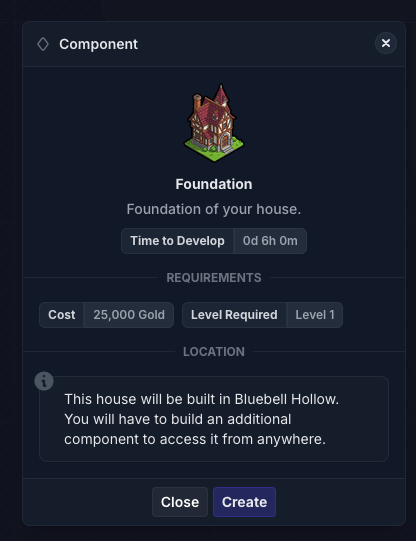
Once you’ve purchased the house, you’ll unlock the housing page. This shows a breakdown of your house’s components, meaning the individual buildings and upgrades you’ve installed.
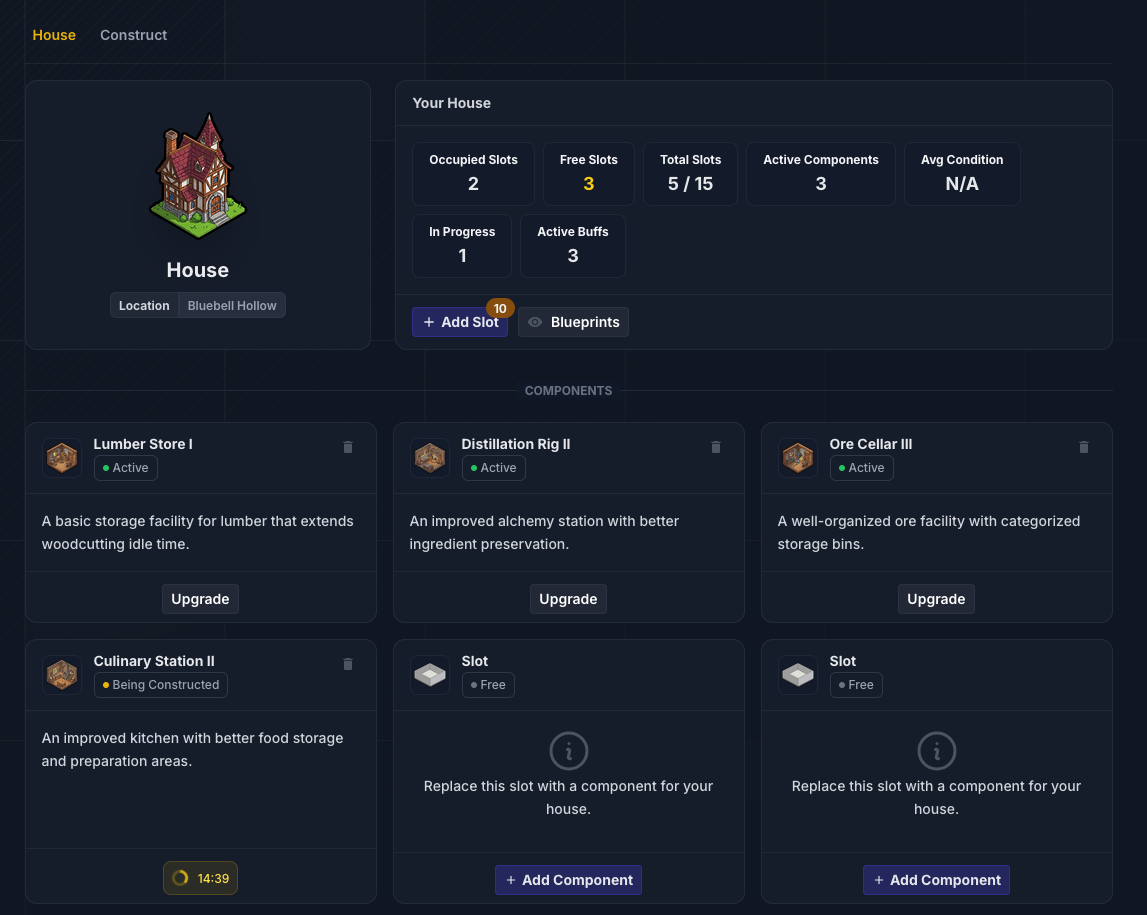
To add a new building or upgrade, you’ll need an available slot. You start with one free slot when you first create your foundation, so you can jump straight in. Selecting that slot will bring up a list of buildings you can construct, each offering different benefits depending on what you choose.
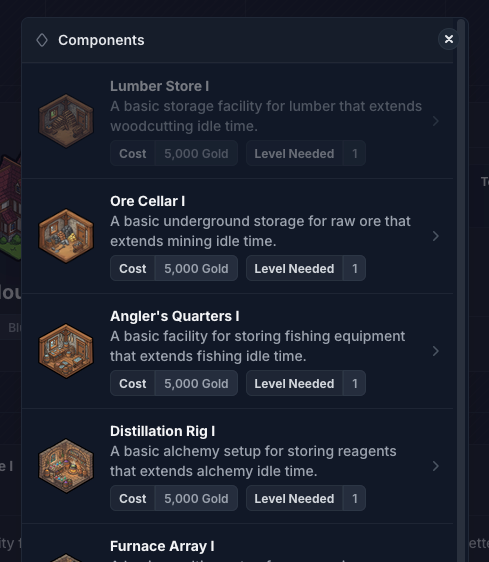
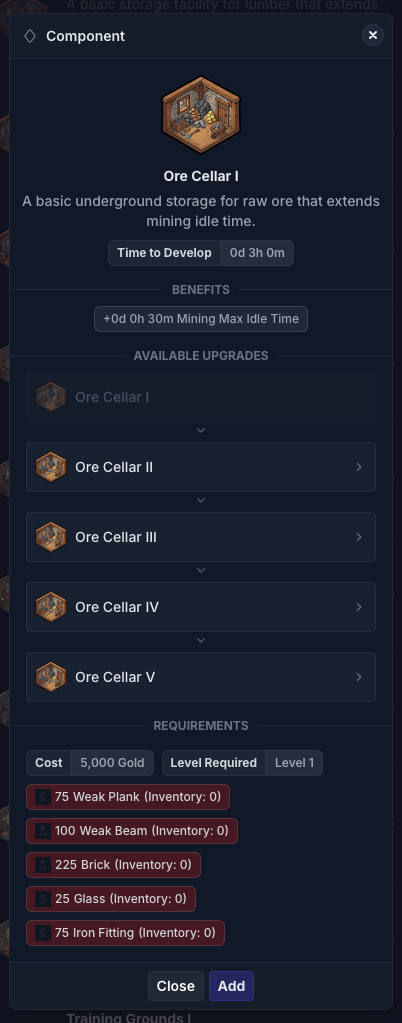
Many of these buildings, especially the ones that extend idle time, start at level 1 and can be upgraded up to level 5. Each upgrade increases the maximum idle duration they provide.
For example, Ore Cellar I increases your idle time by 30 minutes, while Ore Cellar V boosts it all the way up to 4 hours. We’ll go into more detail on the upgrade process later in this post.
Selecting a component shows a full breakdown of its costs, along with the entire upgrade path, so you can clearly see what you’re working toward before committing to it.
Once you start constructing a component, it will develop in the background. It isn’t tied to your character’s actions, so you’re free to continue doing other activities while it builds.
You can view a full breakdown of your components and their progress at any time on the construction page.
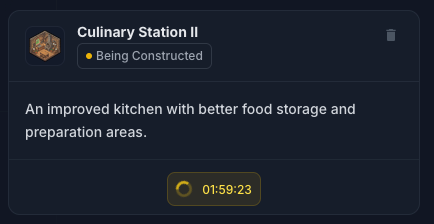
Once a building is finished, you’ll immediately gain access to the benefits it provides.
Upgrading Buildings
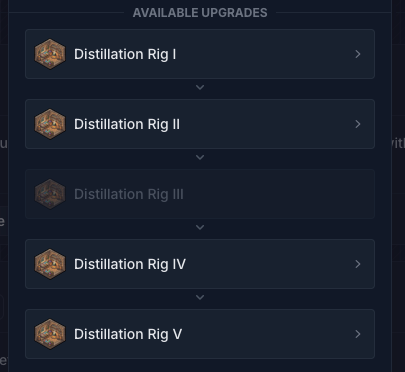
Some buildings can be upgraded from Level 1 up to Level 5, with a full breakdown available when you inspect the component. Each upgrade replaces the existing version and puts the new one into construction.
While a building is being upgraded, its benefits are temporarily unavailable until construction is complete. For example, if you’re upgrading a Culinary Station that increases cooking idle time, the bonus won’t apply again until the new level has finished building.
At the time of writing, these buildings scale from a 30-minute increase at Level 1 up to 4 hours at Level 5.
Repairing Buildings

Buildings will decay over time and need regular upkeep, along with a supply of materials, to stay in good condition. If a building reaches 0% condition, it becomes unusable. You also won’t receive any of its benefits while it’s being repaired.
Repair costs scale based on the building’s current condition relative to its original construction requirements. For example, repairing a building at 70% condition means you only need to cover the remaining 30% of the original materials, and it will take 30% of the original construction time to fix.
It’s worth staying on top of repairs, especially for higher-level buildings, because the longer you leave them to deteriorate, the longer they’ll be out of action when you finally do repair them.
Types of Buildings
As of writing, we have the following buildings:
| Name | Benefit | Upgrade Levels |
|---|---|---|
| Lumber Store | Increases woodcutting maximum idle time. | 1 to 5 |
| Ore Cellar | Increases mining maximum idle time. | 1 to 5 |
| Angler's Quarters | Increases fishing maximum idle time. | 1 to 5 |
| Distillation Rig | Increases alchemy maximum idle time. | 1 to 5 |
| Furnace Array | Increases smelting maximum idle time. | 1 to 5 |
| Culinary Station | Increases cooking maximum idle time. | 1 to 5 |
| Forge Annex | Increases forge maximum idle time. | 1 to 5 |
| Sanctum | Increases meditation maximum idle time. | 1 to 5 |
| Ritual Plaza | Increases seasonal event skills maximum idle time. | 1 to 5 |
| Training Grounds | Increases battle maximum idle time. | 1 to 5 |
| Adventurer's Lodge | Increases dungeon maximum idle time. | 1 to 5 |
| Trailblazer Camp | Increases hunting maximum idle time. | 1 to 5 |
| Remote Conduit | Allows you to access your house from anywhere in the world. | n/a |
| Pet Quarters | Automatically sends your exhausted pet to sleep. | n/a |
| House Ledger | Slightly reduces trade fees when transferring items between alt characters. | n/a |
Construction Skill
To obtain housing materials (such as sand and planks) and reach the required construction levels for certain upgrades, especially at higher tiers, you’ll need to train the Construction skill.
Construction works much like other skills such as Woodcutting or Mining, with one key difference. The items you produce take significantly longer to create. For example, crafting a single basic plank can take up to a minute. As your Construction level increases, your efficiency improves, which reduces the time required to produce materials. In simple terms, the higher your Construction level, the faster you can create the resources needed for housing.
Village Management
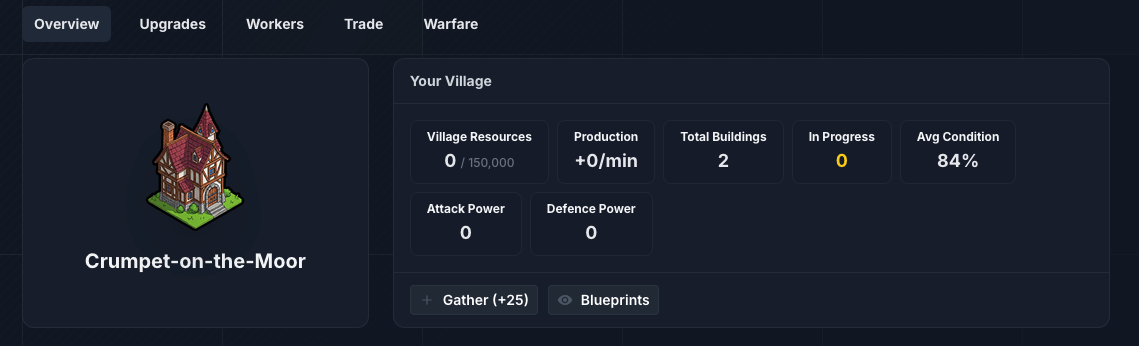
Village Management is a new skill (name pending) that lets you run and oversee your own village. You’ll be able to construct buildings, assign workers, manually gather resources, and trade those resources for gold.
It also introduces a competitive side, allowing you to attack other villages and steal their resources.
(Disclaimer: We're heavy in development with this, so a lot of what you see is placeholder content)
Background
(You can skip this part if you're not too bothered)
Villages will be a bit of a wildcard. Usually when we build a feature, we’re very methodical and cautious. We plan things out long term, iterate slowly, and make sure the foundations are solid before expanding. It’s a big part of why some features take a long time to arrive. We’d rather do it properly than rush something out and regret it later. Village Management, though, is taking a slightly different path. It’s still thoughtful, just with a bit more experimentation.
The idea itself has been floating around for years as this vague concept of a mini simulation layer inside IdleMMO. We always liked the thought of running your own town or village, but it never had clear shape or mechanics behind it. It was more of a "this would be cool someday" idea.
Then, a few months ago, we stumbled across a tiny idle clicker game. I can’t even remember its name now. It was just a simple one-page thing someone probably threw together with Gemini. But it had that classic Cookie Clicker loop. Press a button, numbers go up. Buy an upgrade, numbers go up faster. Basic stuff.
Then we thought, what if we merged that kind of incremental loop with IdleMMO? Instead of it being a separate experience, it could live inside the game as a small self-contained mini-game. Something you can actively interact with by pressing a button for rewards, while also building it out so it keeps generating value on its own through upgrades.
So the idea started forming around a village system that behaves like an incremental. You can jump in and actively push it forward, or step away and let your investments do the work over time. It fits nicely with the idle nature of the game while still giving players something to mess with when they feel like it.
And that’s pretty much exactly what happened. A few weeks ago, we put together a quick proof of concept and just kept building on top of it, adding things we thought were cool and seeing how they felt in practice. Instead of spending weeks mapping everything out in spreadsheets, we took a more hands-on approach and let the feature evolve as we worked on it.
That said, it’s still being built with the same care and standards as everything else. Not having a rigid plan doesn’t mean rushing or cutting corners. It just means we’re not following a heavily detailed blueprint from day one, and are instead shaping the design as it becomes more developed, while still sticking to solid best practices behind the scenes. We don't want this feature to become a bowl of spaghetti.
Village building actually works very similarly to housing. In fact, the timing of these two features has worked out perfectly because they both plug into the exact same underlying systems. So even though we're approaching this feature with a slightly different mindset, there aren't any compromises when it comes to robustness or quality. If anything, it's a great example of why we’ve spent so long keeping the games internal foundations clean and solid.
So Village Management ended up becoming this almost self-contained mini-game inside IdleMMO, largely separate from the main experience. That gave us a safe space to experiment without worrying about unintended ripple effects across everything else. We could try ideas, tweak numbers, and see what felt fun without risking the balance of the core game.
After a while though, it started to feel a bit strange having this disconnected system living inside the game world. It worked mechanically, but it didn’t quite feel like it belonged. So we began looking at ways to tie it back into the main loop in a controlled way.
The direction we landed on was to have Village Management function as a kind of background gold generator, whether you engage with it actively or just let it run passively. It basically acts as a steady, low-pressure system that converts items into long-term value over time. In a way, it also helps move items out of circulation, giving them a purpose beyond just sitting in inventories, while feeding a modest amount of gold to the character.
A better way to think about it is as a kind of investment system for gold and items. Instead of instantly selling something like an oak log to the vendor for 50 gold, you could send it to your village and have it come back later with a higher return, maybe 70 gold after a couple of weeks. That's essentially the foundation of how we’ve connected Village Management to the rest of the game.
Whether we've achieved this is still up in the air. It could end up missing the mark and getting scrapped entirely. That said, even though the development process has had a more experimental, playful energy behind it, we’re being extremely careful with anything that touches the economy.
Village Resources
Village Resources act as the currency for the village. You get Village Resources via three ways:
Manual Gathering

You can press the "Gather" button to collect resources, with each press granting a small amount. There's a short cooldown between presses, so it can only be used once every few seconds. This can be upgraded to reduce the time between presses and increase the amount of resources gained each time.
Passively
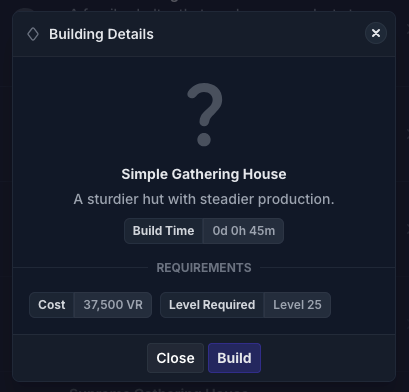
You can gather resources passively via gathering house upgrades. You can build Gathering Houses, and these generate resources passively every X minutes. However, you also need to assign workers to your buildings for them to work.
Trading
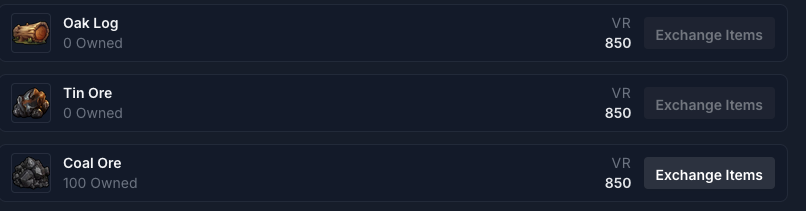
You can trade items for Village Resources. The exchange rate adjusts automatically depending on how “popular” that item is, intelligently (or perhaps not so intelligently… only time will tell). If there’s an oversupply of something like coal, the village will offer fewer resources for it. On the other hand, items that aren’t traded as often across the game may earn you a better return.
Village Resources can also be traded back into gold.
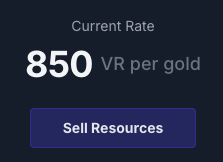
This is where the passive investment side comes into play. You can load in your spare materials to gain Village Resources, use those resources to generate even more over time, and then sell them back to the game for gold.
However, the current rate can vary. The game intelligently (or, again, perhaps not so intelligently), adjusts the value of Village Resources when converting them into gold based on the overall state of the market. If a lot of players are funneling gold out of their villages, the rate may drop. If fewer players are doing it, it could become extremely fruitful. Timing it well is key.
Workers
Your village relies on Workers. They’re the lifeblood that keeps everything running. Without them, the only way to gather resources is by doing it manually through the button, which gets tiring pretty quickly unless you’re a pesky autoclicker. Don’t think you’re safe here.
To gain workers, you’ll need to construct Dwellings. Each dwelling provides a certain number depending on its size. A Basic Dwelling might house 2 workers, while a Grand Dwelling could provide as many as 10.
Once you have workers, they need to be assigned to other buildings to be useful. Gathering Houses, for example, passively produce resources over time but only function if workers are assigned to them. Their output depends on both the number of workers and their happiness, which we’ll touch on next. If a building requires 2 workers but only has 1 assigned, it will operate at 50% efficiency, and that efficiency can drop even further depending on worker happiness.
Happiness
You’ll need to keep your workers happy to maintain full building efficiency, as the two are directly linked. If worker happiness drops to 50%, their effectiveness in assigned buildings also drops to 50%.
So even if you have the correct number of workers assigned, their mood still matters. For example, if a building requires 2 workers and both are assigned, but their happiness is only 50%, the building will only produce half of its normal output.
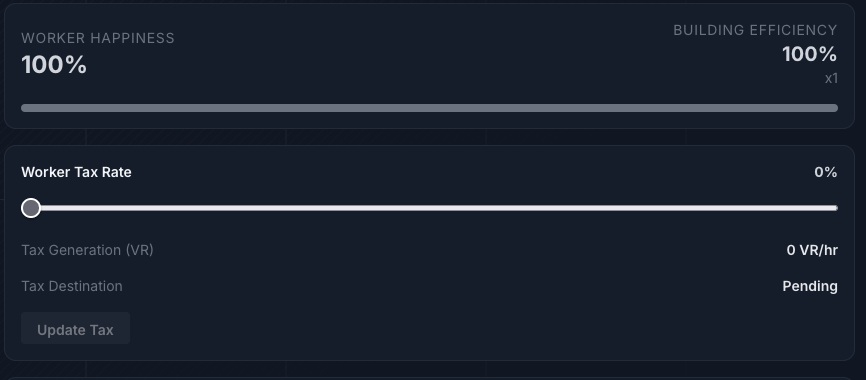
Right now, it’s fairly easy to keep your workers happy. As long as you don’t go full evil landlord on them. Yes, you can tax them into the ground if you want, squeezing out a bit of extra VR at the cost of their happiness.
If you’re the min-max type, you’ll probably end up doing the maths to figure out whether the extra tax income outweighs the drop in efficiency. Just don’t be surprised if your workforce starts looking a little miserable while you do it.
For now, happiness mainly exists as groundwork for future mechanics. It doesn’t have a huge impact yet, but it will become more important as the system expands. For example, things like village warfare may end up affecting worker happiness as well.
Which brings us nicely to village warfare.
Warfare
Who doesn’t love PvP?!? Apparently us, because we still haven’t added it. Warfare is about as close as it gets for now. It’s essentially village-versus-village combat, and it’s completely opt-in, but it can be very rewarding if you choose to take part.
Once you opt in, your village becomes open to attack and you’re free to attack others. It’s a commitment though, as you can’t leave warfare again for 30 days. Attacking lets you raid resources and damage enemy buildings, but it’s not risk-free. Your own village will take damage as well, and your workers probably won’t be thrilled about being dragged into constant conflict.
To prepare, you can strengthen your village by constructing attack and defence buildings. Each one contributes simple attack or defence stats, which are used alongside a bit of light RNG to determine battle outcomes. At the end, you either walk away with extra resources or lose some of your own.
There's definitely room to expand this system later. We could lean into more strategic depth with buildings that counter others, Age of Empires style, so it's not just a numbers comparison. Things like pike defences countering cavalry raids, for example. That's more of a future idea for now, though we might experiment with it sooner if it feels right.
Future
As mentioned earlier, villages give us room to get a little wild with ideas if the system proves to be genuinely fun. We can layer in a lot of depth over time while still keeping it largely self-contained, which helps protect the wider game economy. The intention is for it to feel like its own space, with a very controlled way to move items and gold in and out so things don’t spiral.
There’s a lot of potential directions it could go. We could introduce weather effects, individual citizen happiness, or lean heavily into the micromanagement systems. It really depends on how people play it. All we know right now is that it could end up being one of the best features we’ve made, or a complete disaster. No middle ground.
Release
We’re not entirely sure just yet. Every time we give a release date, we manage to miss it, so our track record isn’t exactly great. To be safe, we’ll give you a nice vague one: sometime this... century.
Jokes aside, it should be soon-ish. Maybe a month or two. Housing is actually finished and ready to go, just waiting patiently. Villages is mostly done as well. We’re currently in the polishing phase, tidying things up and finalising assets. This takes the most time. After that, we’ll likely run an alpha test before getting everything ready for release.
In the meantime, feel free to sign up to our Newsletter. We're planning on running an exclusive newsletter giveaway sometime later this year.
Let us know what you think in the comments!